The implementation of the Law on Urban Development opens up new possibilities for Ho Chi Minh City to proactively select policies, mobilize resources, and organize its own development. This opportunity necessitates a transformation in both how the city operates and how ministries and central agencies coordinate with it.
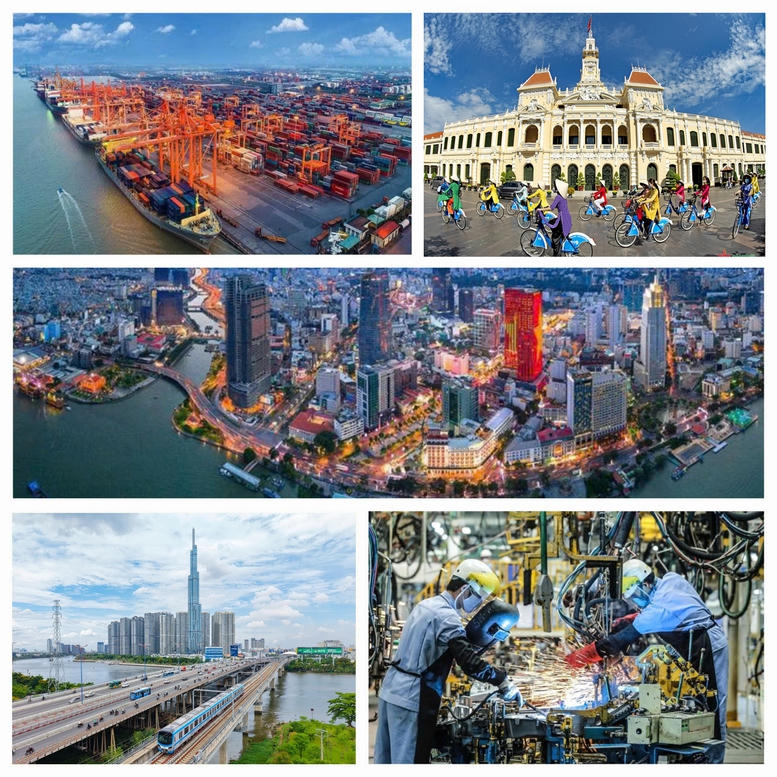
Sectors such as transportation, logistics, the environment, and innovation are all intrinsically linked to national infrastructure, resources, and policy. A city’s autonomy must be complemented by the specialized expertise and connectivity provided by the central government. To achieve breakthroughs, Ho Chi Minh City must develop viable growth strategies, while central ministries and agencies should contribute to ensuring these strategies reach their full potential. This is how a new institutional framework is transformed into tangible value for citizens, businesses, and the economy as a whole.
The city must take the initiative to drive breakthroughs.
Leveraging new authority begins with setting the right priorities. Ho Chi Minh City should focus on programs capable of removing bottlenecks, boosting productivity, and improving quality of life. A single, well-prepared program, executed thoroughly, can generate a far greater impact than multiple initiatives launched simultaneously but lacking sufficient resources.
In particular, the city must integrate various policy instruments into a unified development strategy. Transportation should be linked with housing, employment, and services; logistics with production and commerce; and research with the needs of the business sector. Development value is created through the synergy between these areas.
For instance, developing an area around a public transport hub requires the simultaneous consideration of connectivity, building density, housing, schools, public spaces, and capital. If these elements are addressed in isolation, land values might rise, but there may be no corresponding improvement in accessibility or quality of life. A comprehensive approach ensures that infrastructure investment creates new job opportunities, improves access to services, and generates resources for reinvestment.
For each program, the city must clearly define the scope of its own authority, the necessary conditions for implementation, and the desired outcomes. Local resources must be prepared, and responsibilities for decision-making and execution must be explicitly established. Proactiveness is also demonstrated by the ability to identify, at an early stage, matters that require coordination with the central government.
Therefore, any request for coordination should be accompanied by a clearly defined problem, a proposed course of action, and an outline of the specific support required. The more detailed the documentation, the better equipped the ministries and central agencies will be to provide focused input and collaborate with the city in finding solutions. Being proactive means preparing a solid foundation for decision-making, as well as the necessary conditions to effectively implement those decisions.
Decentralization Requires a New Approach to Collaboration
For Ho Chi Minh City, the implementation of the Law on Urban Development must be grounded in the specific mechanisms designed for a "special-status" urban area. Relevant authorities must accurately identify the city’s decision-making powers and the conditions required to exercise each, avoiding the blanket application of procedures intended for other localities.
The Law provides for various forms of coordination. Some matters fall under the city’s sole decision-making authority; others require consultation with or the consensus of relevant ministries and sectors; while some remain under the jurisdiction of central state agencies—or may only be delegated to the city upon specific authorization. In instances where approval from a "competent authority" is required, this must be interpreted in accordance with the Law’s definition regarding the competent authority as designated by the Party.
It is essential to distinguish between the power to make a decision and the conditions required to exercise that power. Under Article 10, the city is authorized to approve master plans, but it must first solicit input from relevant ministries and stakeholders. Under Article 11, the approval of plans concerning underground, low-rise, and high-rise spaces requires the consensus of the Ministry of National Defence and the Ministry of Public Security. In both cases, the authority to grant approval rests with the city; the distinction lies in the fact that the first scenario requires a consultation process, while the second necessitates the consensus of specific ministries—as stipulated by the Law—prior to the final decision.
On this basis, the city and the various ministries and sectors must review their operational procedures. Matters falling within the city’s jurisdiction should be handled proactively, while tasks requiring coordination must be supported by clear documentation, designated points of contact, and defined timelines. By each party fulfilling its respective responsibilities, proposals can be refined and decisions issued in a timely manner.
Furthermore, Article 56 mandates the provision of professional guidance, as well as the conduct of inspections and audits, in alignment with the established framework for decentralization, delegation of authority, and collaborative efforts in the development, implementation, and evaluation of policies and mechanisms. Ministries and central agencies can participate as early as the preparatory phase, contributing data, expertise, and risk identification.
Effective collaboration entails acting within one’s mandate and at the right time, ultimately enhancing the quality of development decisions.
Central-level support for specific development programs
Collaboration with Ho Chi Minh City should be demonstrated through concrete contributions to the quality and effectiveness of its development programs. Ministries and central agencies possess distinct advantages in terms of specialized knowledge, data, national networks, and international relations. Aligning these strengths with the city’s needs will bolster its capacity to address complex, large-scale challenges.
In the development of public transport integrated with urban areas, Ho Chi Minh City must proactively devise plans for spatial organization, housing, services, and investment structures. The Ministry of Construction can provide professional input on infrastructure connectivity, safety, and operational aspects, while also assisting in assessing the system’s capacity to adapt to shifts in population density and travel demand.
The Ministry of Finance can collaborate on analyzing capital mobilization strategies, budgetary obligations, and financial risks—helping the city evaluate the balance between investment costs, revenue streams, and the long-term sustainability of services. Meanwhile, the Ministry of Agriculture and Rural Development and the Ministry of Natural Resources and Environment can provide data and expertise regarding land, environmental factors, hydrology, and climate-related risks. Such contributions should be structured within the scope of each agency’s respective functions and authority, tailored to the specific requirements of the program.
By coordinating from the outset, the city is better positioned to select optimal solutions, minimize the costs of subsequent adjustments, and secure long-term benefits. An area surrounding a transit station can only be considered truly successful if it offers residents convenient mobility, accessible housing and services, and infrastructure robust enough to meet their needs. In the realms of logistics and commerce, the value contributed by the central government lies in its capacity to facilitate connectivity across the entire supply chain. While the city takes the lead in organizing logistics spaces and services, central ministries and agencies provide essential support regarding transport infrastructure, customs, specialized regulatory oversight, and market access. The efficiency of a logistics hub depends as much on its external network as it does on the speed at which goods move through various processing stages; a single bottleneck anywhere in the chain can diminish the value of substantial investments.
Regarding innovation, Ho Chi Minh City must identify the specific technological needs of its businesses as well as the urban challenges that require solutions. The Ministry of Science and Technology and the Ministry of Education and Training can help by aligning research programs, academic institutions, and experts with these identified needs. Such support becomes far more impactful when directed toward clear, concrete objectives—whether that involves mastering specific technologies, boosting productivity, developing human capital, or transitioning research outcomes into industrial production.
This partnership is truly valuable when the capabilities of the national system empower the city to more effectively address its specific challenges. In turn, successes achieved in Ho Chi Minh City can generate new markets, collaborative opportunities, and knowledge that benefit other localities across the country.
Coordination Based on Responsibility and Results
To sustain these contributions, coordination must be organized around specific priority programs, with clearly defined focal points, tasks, and timelines. Each party must understand what deliverables are required, when they are due, which decisions they are intended to support, and for whom they are prepared.
The city should take the initiative in proposing a coordination plan, identifying the specific matters to be discussed with each ministry. Responsibilities for decision-making, providing professional counsel, and supplying information must be delineated in accordance with the law. Designated coordination focal points are responsible for monitoring progress, facilitating connections between agencies, and escalating obstacles to the appropriate level for resolution.
Every request for support should be linked to a verifiable deliverable—such as a dataset, expert opinion, infrastructure connectivity plan, or a solution to a specific bottleneck. Deadlines must align with the program schedule to ensure that information arrives in a timely manner and can be effectively utilized for decision-making.
When issues arise that exceed the city’s authority, submissions to the competent higher authority should clearly outline proposed solutions, the underlying rationale, and any points of disagreement. This approach ensures that inter-agency and inter-regional coordination focuses directly on the core issues requiring a decision.
The effectiveness of coordination should be measured by development outcomes: shorter processing times, more efficient use of resources, reduced travel and business costs, and improved access to services. Feedback from citizens and businesses serves as a vital source of information for verifying these results.
Furthermore, the city and the various ministries and sectors should jointly assess inter-regional impacts, identify potential risks, and consolidate lessons learned. Successful initiatives can provide a foundation for refining national policies. In this way, such collaboration yields mutual benefits: the city receives support for its development, while the central government gains practical evidence to enhance the quality of its governance. The law has created an opportunity for Ho Chi Minh City to more effectively fulfill its role as a driver of development. The city must take the initiative in making choices, organizing actions, and assuming responsibility for the outcomes. Meanwhile, central ministries and agencies should contribute their expertise, facilitate the connection of resources, and ensure effective coordination.
When the city acts proactively and the central government provides substantive support, this new institutional framework will translate into enhanced competitiveness, a better quality of life, and a powerful development impetus—not only for the city itself but for the entire region and the nation as a whole.