On the morning of November 13, under the direction of Vice Chairman of the National Assembly Nguyen Hong Dien, the National Assembly held a plenary discussion on the draft Law on Postal Services (amended).
Amid the boom in e-commerce, consumers making purchases on e-commerce platforms are required to provide personal information—such as their full name, phone number, and address—to facilitate delivery. This information is then shared with various parties, including sellers, digital platforms, postal service providers, intermediaries, and delivery personnel.
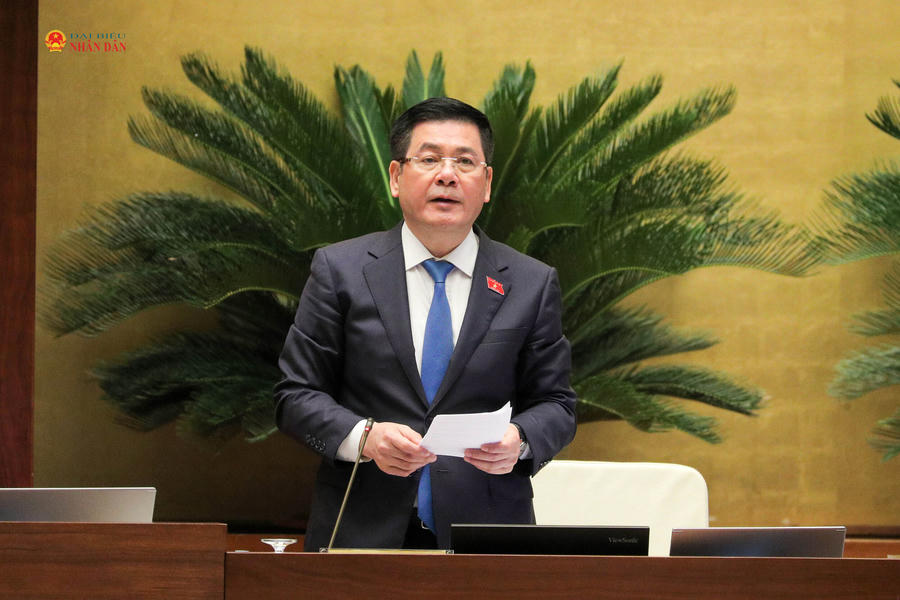
Highlighting this reality, National Assembly deputy Nguyen Thi Suu (from Hue City) raised the question: who is authorized to collect, use, and store this information, and who bears responsibility in the event of a data leak?
Delegate Nguyen Thi Suu emphasized that this issue concerns privacy rights and the confidentiality of postal items. While expressing support for provisions regarding digital postal services, identification, and tracking, she urged for a clear definition of the scope of data to be collected, cautioning against an overly broad interpretation of "content of postal items." Specifically, Point a, Clause 1, Article 37 of the draft law stipulates that postal data includes information regarding the content of postal items.
Delegate Nguyen Thi Suu argued that this phrasing lacks precision; it could refer to a declaration of goods, but it could also be interpreted as the actual contents of letters, documents, or other postal items—two types of information that differ significantly in terms of their implications for privacy rights.
A definition of "input" that is too broad could lead to excessive data collection. While I acknowledge the explanations regarding compliance with data protection laws and the principle of data minimization, this needs to be more explicitly defined within the postal legislation—given that the confidentiality of postal items is a unique characteristic of this sector. Therefore, I propose amending Point a, Clause 1, Article 37 to read as follows: "information provided by the sender regarding the description and declaration of a postal item, as well as information strictly necessary for the provision of postal services."
The collection and processing of information contained within a postal item should only be carried out when there is a legal basis and in accordance with the procedures and authority prescribed by law. Furthermore, Clause 2, Article 6 should be amended to ensure the confidentiality of both postal items and information related to the use of postal services, in accordance with the law—rather than limiting the scope solely to the confidentiality of the postal items themselves.Delegate Nguyen Thi Suu also suggested that a distinction should be made between the collection of basic information and enhanced identity verification based on risk levels. Clause 1, Article 45 of the draft law requires businesses that accept postal items to collect and store full information about the sender. Meanwhile, Clauses 2, 3, and 4 of the same article provide for risk classification and corresponding verification procedures.
According to Delegate Nguyen Thi Suu, if a risk-based control approach is adopted, Clause 1 should also specify the principle that the information collected must be necessary and proportionate—thereby avoiding the interpretation that "the same information must be provided and stored for every single postal item." Furthermore, the explanatory appendix outlines three levels of risk—low, medium, and high—implying that verification requirements should not be identical for all postal items. The delegate argued that this principle should be explicitly stipulated within the draft law itself.National Assembly deputy Vuong Kim Anh (Phu Tho province) emphasized that in the context of digital transformation, every postal item is linked to personal data. The leakage of information from shipping labels and order forms—which can be exploited by malicious actors for fraudulent purposes—has become a major source of concern among voters. Consequently, the deputy proposed tightening regulations on the protection of personal data and establishing a clear roadmap for transitioning from a "pre-check" (ex-ante) to a "post-check" (ex-post) regulatory approach.
Encouraging investment in technology and green infrastructure
Also addressing the issue of postal data, National Assembly deputy Nguyen Minh Son (Dong Thap province) argued that Article 39 of the draft law focuses primarily on requiring enterprises to connect and provide data in accordance with the requests and methods specified by competent state authorities. Such a provision, he noted, is insufficient to establish a modern management framework.Therefore, the delegate suggested that the drafting committee should more clearly define the responsibilities for updating, connecting, and sharing data—whether on a periodic or real-time basis—for all necessary datasets.
It is essential to clearly specify data categories, connectivity standards, and the responsibilities of agencies that receive and utilize such data, while simultaneously ensuring the protection of business secrets and personal data.
Regarding "green postal services," delegate Nguyen Minh Son proposed either adding a new clause to Article 4 or tasking the Government with providing detailed regulations on policies for the development of green postal services.
In this regard, it is necessary to clarify the various solutions for reducing emissions during the transportation, sorting, delivery, and packaging of postal items, as well as policies to encourage and incentivize investment in green technologies, transport vehicles, and infrastructure within the postal sector.