Permanent Deputy Prime Minister Pham Gia Tuc has just signed and issued a high-priority plan to combat smuggling, commercial fraud, and counterfeit goods during the 2027 Lunar New Year (Year of the Goat).
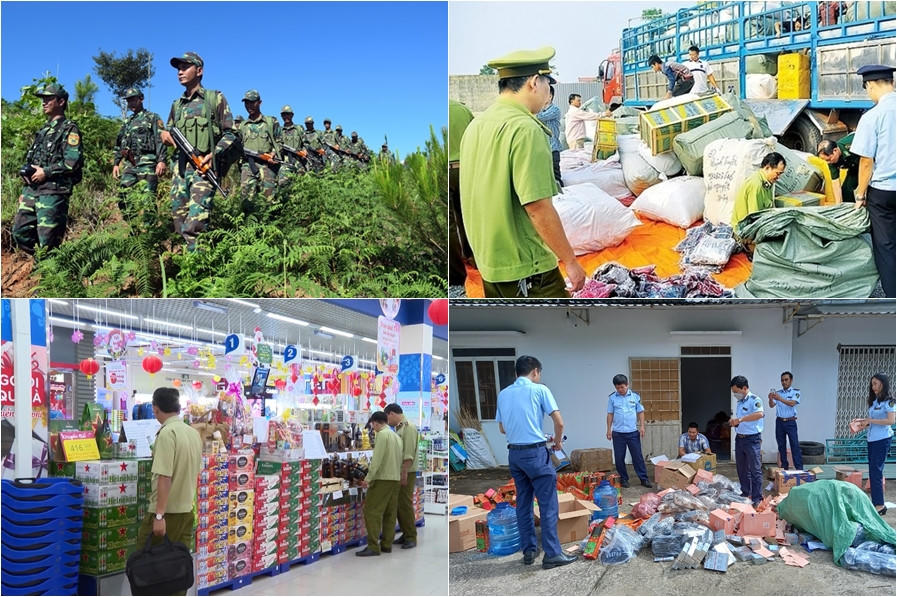
According to Decision No. 186/QĐ-BCĐ, issued on November 12, 2026, by Permanent Deputy Prime Minister Pham Gia Tuc—who also serves as the Head of the National Steering Committee for the Prevention and Control of Smuggling, Commercial Fraud, and Counterfeit Goods—this intensive enforcement campaign will officially run from November 12, 2026, through February 28, 2027.
The primary objective is to maintain strict oversight of the circulation of goods before, during, and after the 2027 Lunar New Year (Tet) holiday.
To ensure the effective implementation of this plan, member ministries and agencies of the National Steering Committee, along with local steering committees, are tasked with proactively deploying personnel and resources to enforce rigorous controls—spanning from border areas to the domestic market and the digital space (cyberspace).
Inspections will be carried out comprehensively across all land, rail, river, sea, and air border crossings, as well as along informal trails, unofficial crossings, and areas near the border used for the consolidation of goods.
Authorities will focus their efforts on combating the trafficking of prohibited items, including narcotics, weapons, fireworks, smuggled foreign cigarettes, electronic cigarettes, and endangered or rare species of wild flora and fauna.
Simultaneously, strict monitoring will be applied to counterfeit or substandard products—such as pharmaceuticals, dietary supplements, cosmetics, traditional medicinal ingredients, food and food products, and items that infringe upon intellectual property rights.
Furthermore, close supervision will be maintained over conditional import-export goods, items subject to high tax rates, and essential commodities in high demand during the Tet holiday—including petroleum, gold, foreign currency, electronics, luxury fashion, alcoholic beverages, confectionery, and livestock and poultry. Relevant units must promptly identify new methods and tactics used by offenders to effectively target the masterminds and ringleaders behind complex criminal networks and groups, while clearly defining the accountability of heads of agencies and local authorities.
In the domestic market, competent authorities will step up inspections of warehouses, transit hubs, logistics facilities, industrial zones, wholesale markets, and commercial centers.
Business activities on e-commerce platforms, social media, and digital applications will also be closely monitored to prevent the storage and sale of goods with unknown origins.
Interdisciplinary task forces will be established to oversee operations, provide guidance, and facilitate data sharing among various agencies. The plan also mandates professional training for Customs, Tax, and Market Surveillance personnel to put an end to the practice of "fragmenting" or "downplaying" cases—treating them as minor administrative violations rather than referring matters with criminal implications to the police for investigation.
Alongside these inspections, public awareness campaigns regarding the law will be intensified in border provinces, remote mountainous areas, islands, and regions inhabited by ethnic minority communities, encouraging residents to remain vigilant and avoid aiding or abetting criminal activity.The Ministry of Finance has directed the Customs authority to enhance risk analysis and tighten oversight of import-export goods, transit cargo, personal luggage, and vehicles entering or leaving the country. This initiative aims to prevent transfer pricing, money laundering, and the fraudulent misrepresentation of the origin of goods (falsely claiming Vietnamese origin).
Monitoring efforts will focus on import-export enterprises, businesses engaged in temporary importation for re-export, key traders, and border residents who frequently collect and transport goods across the border.
Concurrently, the tax authorities are tasked with strengthening the management of invoices and preventing budget revenue losses in high-risk sectors, such as digital platform-based business, tax refunds, and tax exemptions or reductions.
Tax agencies will collaborate to investigate and strictly penalize the illegal trade of invoices—often used to legitimize smuggled goods—as well as the establishment of "shell" companies created for the purpose of tax evasion.
Under the Ministry of Industry and Trade, the Domestic Market Development Department and local Market Surveillance forces are responsible for rigorously inspecting the origin and quality of goods in circulation, while working closely with brand owners to combat counterfeit products.
The Vietnam E-commerce and Digital Economy Agency will also conduct reviews of websites, social media platforms (such as Facebook, Zalo, and TikTok), and, in particular, cross-border e-commerce marketplaces that offer low-priced goods.
Furthermore, provincial and municipal Departments of Industry and Trade must closely monitor supply, demand, and price trends for essential commodities to proactively implement market stabilization measures.
The primary objective is to strictly prevent the hoarding of goods, shortages, or supply chain disruptions that could trigger sudden price spikes toward the end of the year.
In border and maritime areas, the Ministry of National Defense has directed the Border Guard and the Coast Guard to intensify patrols and dismantle smuggling rings, ensuring that no warehouses or storage facilities for smuggled goods are established near the borders. Military judicial authorities are accelerating investigations and ensuring strict prosecution of major cases, while also expanding international cooperation with counterparts in neighboring countries to combat cross-border crime.
The Ministry of Public Security and its subordinate units will launch targeted operations to dismantle, from the root, networks involved in smuggling, the production of counterfeit goods, and the illegal cross-border transport of currency.
Investigations will be broadened to examine state management responsibilities, with strict action taken against any instances of collusion, corruption, or misconduct. Furthermore, in coordination with the Procuracy and the Courts, cases will be brought to public trial to serve as a deterrent.
The Ministries of Culture, Sports and Tourism; Agriculture and Rural Development; Health; Science and Technology; and Construction will, within their respective mandates, exercise strict control over illicit publications and harmful cultural products, as well as oversee quarantine procedures and food safety.
Inspections will be conducted comprehensively across road, rail, waterway, and air transport networks, with a focus on railway stations, bus terminals, airports, and seaports.
To foster social consensus, Vietnam Television, the Voice of Vietnam, and the Vietnam News Agency will increase their coverage—reporting promptly on arrests and the handling of violations, while also exposing instances of misconduct and the protection of smuggling activities.
Finally, local steering committees are tasked with advising provincial and municipal People’s Committees to ensure an adequate supply of high-quality, safe consumer goods for the public during the Tet holiday. Local authorities at the commune level must also maintain a firm grasp of their jurisdictions, taking decisive action to prevent the emergence of hubs for the transit of smuggled or counterfeit goods, as well as violations regarding price labeling, throughout the peak period of the 2027 Lunar New Year (Year of the Goat).