(Chinhphu.vn) - To ensure fire safety and minimize the risks of fires and explosions involving gas, the Department of Fire Prevention, Fighting and Rescue (under the Ministry of Public Security) advises gas business owners and the general public to strictly follow several key safety measures.
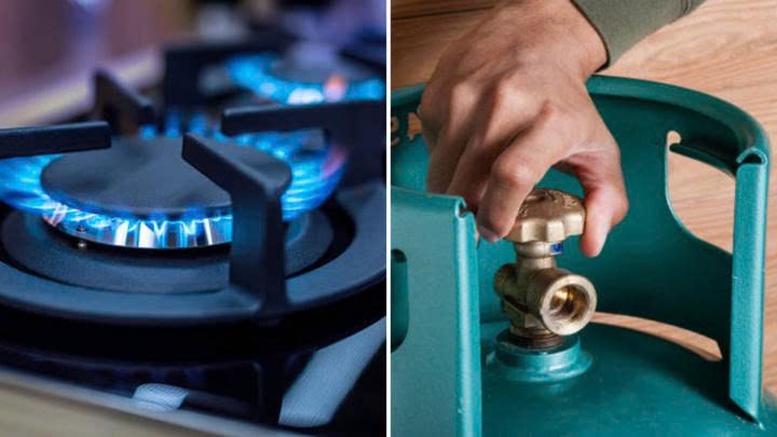
Regarding the explosion that occurred on Nguyen Van Tuyet Street (Hanoi) on November 24, authorities have determined that the initial cause is suspected to be a gas explosion, which led to the partial collapse of a single-story structure located behind the E4 residential complex on Nguyen Van Tuyet Street, Dong Da District, Hanoi. According to the Fire Prevention, Fighting, and Rescue Police Department, the increasing use of liquefied petroleum gas (LPG) has led to a rise in gas-related fires and explosions. However, many people lack sufficient knowledge regarding the proper storage and use of gas, creating a high risk of such incidents.
To ensure fire safety and minimize the risk of gas-related fires and explosions, the Fire Prevention, Fighting, and Rescue Police Department advises gas business owners to fully comply with all requirements for LPG operations. This includes dealing only with gas cylinders from legitimate sources that meet quality standards; storing and arranging cylinders in accordance with regulations and professional guidelines—specifically by designating separate areas for full and used cylinders—while ensuring proper ventilation, securing cylinders against tipping, and keeping them away from open flames, heat sources, and equipment that could generate heat or sparks.
Furthermore, businesses must be equipped with the necessary fire prevention, firefighting, and rescue equipment as mandated by law. Signs such as "No Open Flames" and "No Smoking," along with fire safety rules and instructions, must be displayed in clearly visible and accessible locations. Business owners are also responsible for maintaining fire safety conditions at their premises and conducting regular, periodic self-inspections throughout their period of operation. Store personnel must possess fundamental knowledge regarding LPG and must undergo training, testing, and certification in fire prevention, firefighting, and rescue operations. Gas retail establishments are required to regularly inspect their storage areas, equipment, facilities, and overall safety conditions; they must also organize the dissemination of emergency response plans and conduct drills in accordance with established regulations.
The electrical system within the store must feature protective devices housed in sealed enclosures. Lighting fixtures and switches must be explosion-proof.
The Department of Fire Prevention, Firefighting, and Rescue mandates that gas retail establishments must not perform LPG decanting or refilling using unauthorized equipment or methods. Refilling into cylinders that fail to meet safety standards or have not undergone required inspections is prohibited. Furthermore, the sale of damaged or leaking cylinders—or any cylinders that do not meet safety requirements—is strictly forbidden.
For premises that combine residential use with gas retail, the establishment must comply with all LPG business requirements as well as the provisions set forth in Article 21 of the 2024 Law on Fire Prevention, Firefighting, and Rescue. It is strictly prohibited to arrange sleeping quarters within the business area.Purchase or exchange gas cylinders only through authorized dealers and qualified establishments
For gas users, the C07 Department (Police Department for Fire Prevention, Fighting, and Rescue) advises purchasing or exchanging gas cylinders exclusively through authorized dealers and qualified establishments. Always verify the brand, the integrity of the seal, the supplier’s information, and the overall condition of the cylinder. Do not use cylinders of unknown origin, those that have been reused excessively, or any that show signs of tampering.
Keep gas cylinders in an upright position, in a well-ventilated area where the shut-off valve is easily accessible. Ensure they are kept away from heat sources, sparks, and direct sunlight. Never place cylinders in basements, pits, low-lying areas, or enclosed spaces with poor ventilation. Do not attempt to connect additional gas cylinders on your own.
Use only specialized, high-quality gas hoses that are free from cracks, fractures, or bulges. Ensure that valves, pressure regulators, and connectors are compatible and securely installed. Replace any damaged components; installation and repairs should always be performed by qualified professionals.
Before use, check the kitchen area and ignite the stove according to the provided instructions. When finished, first close the cylinder valve, then turn off the stove to allow any remaining gas in the hose to burn off completely.
Never leave a stove unattended while it is in operation. Do not use a gas stove for space heating or drying items, and keep flammable materials away from the cooking area.
For household gas use, please note the following: Gas cylinders must be kept at least 1.5 meters away from the stove and any heat sources or potential sparks (such as open flames, electrical switches, or power outlets). The gas stove itself should be positioned at least 15 to 20 centimeters away from walls or other obstructions, kept clear of flammable or explosive materials, and shielded from direct drafts to ensure both safety and efficiency during use. Do not make unauthorized modifications, connections, or changes to the number of gas cylinders
For the use of gas stoves in commercial establishments, food service businesses, or communal kitchens, the C07 Department (Fire Prevention, Fighting, and Rescue Police Department) requires that the gas supply system—including shut-off valves, pressure regulators, hoses, connections, and appliances—be inspected before operation. Inspections must also be conducted at the end of each shift, and the main gas valve must be shut off when operations cease.
Gas cylinders, storage areas, and piping must be arranged in compliance with regulations, ensuring proper ventilation and the presence of warning signs. Goods must not obstruct shut-off valves or block emergency exit routes.
Do not make unauthorized modifications, connections, or changes to the number of cylinders, their placement, or the piping system without assessment and execution by a qualified professional. Equip the premises with appropriate, functional firefighting equipment, placed in visible and easily accessible locations. Train staff on how to raise an alarm, shut off safety valves, evacuate, and handle initial emergency situations. Keep emergency exit routes clear at all times.
Responding to a gas leak
If the smell of gas is detected or a leak is suspected, remain calm and alert others. Quickly cover your nose and mouth with a damp cloth, move toward the gas cylinder area, and close the cylinder’s shut-off valve to stop the leak.
Open windows and doors to allow the gas to dissipate.
Do not turn electrical switches, circuit breakers, fans, or other electrical appliances on or off. Do not smoke, use lighters, create sparks, or use mobile phones in the area where a gas leak is suspected.
Move to a safe area (such as an outdoor courtyard or alleyway), then call the Fire Prevention, Fighting, and Rescue Police. Contact your gas supplier or a technical service provider to have the system inspected and repaired. Promptly move individuals out of the danger zone to a well-ventilated area, away from the leak; warn others and prevent unauthorized personnel from entering. Do not return until the area has been declared safe.