(Chinhphu.vn) - On the morning of November 21, with 415 out of 474 deputies (83.17%) voting in favor, the National Assembly passed the draft Law on the Donation, Procurement, and Transplantation of Human Tissues and Organs, and the Donation and Procurement of Human Cadavers (amended).
Following revisions and refinements, the draft Law consists of 7 chapters and 39 articles. It is set to take effect on January 1, 2028.
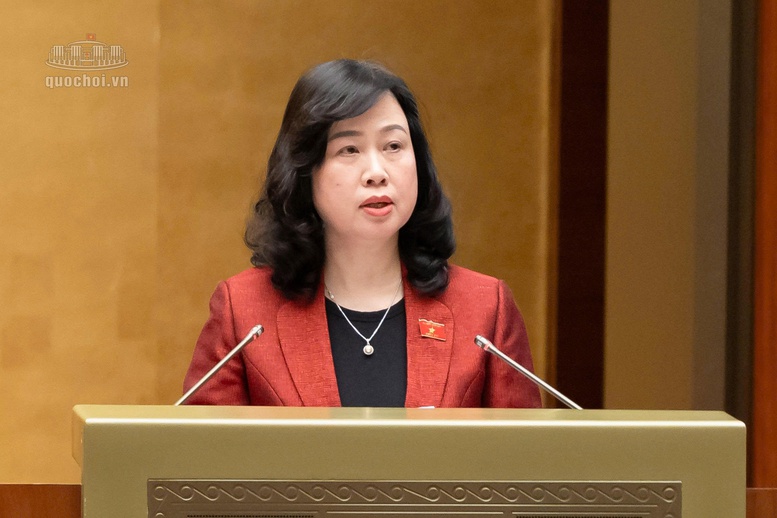
Presenting the report on the incorporation of feedback, clarifications, and revisions to the draft Law before the National Assembly, Minister of Health Dao Hong Lan stated that, based on input from National Assembly deputies and the National Assembly Standing Committee, the Government has adjusted the draft to strengthen protections for donors—particularly those under the age of 18.
Children may only donate regenerative tissue in exceptional circumstances.
Accordingly, the draft Law stipulates that non-regenerative tissues or body parts may not be harvested from individuals under 18 years of age. Furthermore, registration for organ or tissue donation is restricted to those aged 18 and older, ensuring that registrants possess the necessary capacity and awareness, and that the decision to donate is entirely voluntary. Addressing a point that drew significant attention both in the National Assembly and among the public, Minister Dao Hong Lan explained that the Government had carefully considered and listened to concerns regarding the donation and harvesting of tissues or body parts from children. "The Government deeply values and understands these concerns, as they stem from a place of love and a sense of responsibility toward children," the Minister emphasized.
Nevertheless, the draft Law retains one specific exception: the donation of regenerative tissue by a living minor, permitted solely when it is vital for the survival of another child. Specifically, a child may donate regenerative tissue—such as hematopoietic stem cells—to assist a sibling suffering from a malignant blood disorder or a severe congenital blood disease. According to the Minister, a stem cell transplant may be the only chance for a cure for the affected sibling.
Such a donation requires both the consent of the child and written consent from their parents. Both the child and their parents must receive independent counseling—covering legal, health, and age-appropriate psychosocial aspects—before any donation can proceed. Such donations must be reviewed by an advisory council that includes representatives from state authorities responsible for child affairs or organizations dedicated to protecting children's rights. Furthermore, the head of the medical facility must provide written approval.
"If at any point the child or their parents show signs of dissent, the procurement of regenerative tissue must cease immediately," emphasized Minister Dao Hong Lan.
The draft law also narrows the scope of who may act as a legal representative to provide consent for donation. It establishes a clear order of priority for those authorized to grant consent, outlines procedures for resolving disagreements among family members, and clarifies the status of legal representatives for donors aged 18 and older.
Post-mortem organ donation requires family consent.
Another significant point raised by the Minister is that registering to be a donor does not automatically guarantee that the individual meets the criteria for the procurement of tissues, organs, or their body after death. Registered donors, their legal representatives, or their biological parents retain the right to withdraw consent at any time.
The draft stipulates that the donation or procurement of human tissues or organs is prohibited if the donor, their legal representative, or their biological parents refuse to consent—or if they demonstrate dissent or a lack of cooperation—at any stage. This provision is intended to ensure that consent remains genuinely voluntary, preventing a prior registration from being treated as the sole justification for the procurement of tissues or organs. Furthermore, the Minister stated that the draft law has refined provisions regarding representatives authorized to consent to organ donation, clearly establishing an order of priority and procedures for resolving disagreements among representatives of the same priority level.
In addition to protections for individuals under 18, the draft law also adjusts the conditions for living organ donation to mitigate the risks of trafficking and the commercialization of organ donation and transplantation.
Under the draft, individuals aged 25 or older may donate organs while living to recipients who are not family members. Donors must receive independent counseling covering legal, health, and psychosocial aspects. The individuals responsible for assessing a donor’s eligibility must be distinct from those who authorize the transplantation for the recipient or perform the actual organ retrieval.
Raising the minimum age for donating to non-family members from 18 to 25 ensures that donors possess sufficient maturity, the capacity for independent decision-making, and are less susceptible to economic pressures. Individuals between the ages of 18 and 25 may only donate organs to family members.
To prevent trafficking, the allocation of organs donated to non-family members is managed by a national coordinating body. Organ retrieval may only proceed following written approval from an advisory council—comprising experts in medicine, law, and psychology—whose members are not involved in the actual retrieval or transplantation procedure. Police authorities, People’s Committees, and other relevant agencies are tasked with verifying the personal relationships and places of residence of both the donor and the recipient. In cases involving spouses, a minimum duration of marriage, as stipulated by the Government, must be met.Tightening conditions for organ and tissue donation and transplantation to prevent trafficking
To strengthen preventive measures, the draft Law increases the number of prohibited acts from 10 to 29. These additions include the buying, selling, or brokering of human tissues or organs; the exploitation of adoption, alternative care, guardianship, or dependent relationships for the purpose of donating or harvesting human tissues or organs; and the trafficking of human tissues or organs by taking Vietnamese citizens abroad or bringing foreign nationals into Vietnam for illegal transplantation procedures. Minister Dao Hong Lan stated that these additional prohibitions are intended to ensure stricter oversight and prevent the exploitation of legal loopholes for illicit gain through the donation, harvesting, and transplantation process.
The draft also prohibits the harvesting of tissues or organs in cases where the cause of death is unclear, or where there are suspicious circumstances or indications of potential illegal activity.
Furthermore, the draft Law clarifies and expands the rights of donors. Living donors are entitled to free periodic health check-ups relevant to the organ or tissue they donated, as well as health insurance coverage in accordance with regulations.
The state budget will cover the costs associated with evaluating and identifying potential donors, providing post-donation care and recovery, conducting periodic health check-ups, and paying health insurance premiums for those who have donated an organ or tissue. Donors are not required to pay for the harvesting or transplantation procedures; these costs are covered by the health insurance fund or the recipient.
In cases where an individual has donated an organ or tissue following brain death or circulatory death, their biological parents, spouse, biological children, and biological siblings are granted priority for transplantation should they appear on a transplant waiting list. The draft law tasks the Government with establishing regulations for funeral and burial arrangements for organ and tissue donors.
It also designates May 20th of each year as a Day of Gratitude for Organ and Tissue Donors, aimed at honoring donors and their families, while raising public awareness about this humanitarian act.
The draft law outlines fundamental principles for determining brain death and circulatory death, requiring adherence to specific professional standards and a formal written conclusion from a medical council. It specifies the composition of such councils and the principle of independent assessment; the criteria for determination must encompass clinical and paraclinical standards, as well as timeframes, in line with international benchmarks.
"Even after a conclusion of brain death or circulatory death has been reached, the decision to proceed with donation remains entirely at the discretion of the family. Families are provided with counseling and comprehensive information, and they retain the right to decline at any stage," emphasized Minister Dao Hong Lan.