According to Pham Thi Thanh Huong, Deputy Director of the Hanoi Department of Justice, the spirit of Vietnam Law Day—and the ethos of upholding the rule of law—is increasingly becoming a way of life within the community, from the city level down to the grassroots.
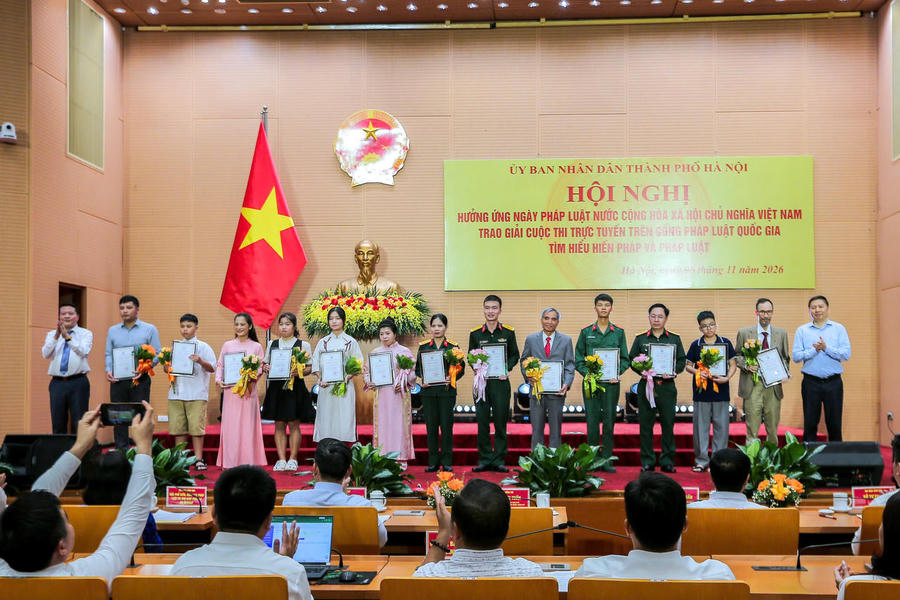
According to Pham Thi Thanh Huong, Deputy Director of the Hanoi Department of Justice, "Law Day of the Socialist Republic of Vietnam" (observed annually on November 9) serves as an occasion to honor the Constitution and the law, affirm the role of law in state governance and social life, and foster a greater sense of respect for, compliance with, and protection of the law among all agencies, organizations, and citizens.
To ensure that the observance of Law Day goes beyond mere formality and truly integrates the law into daily life, the Hanoi Department of Justice has spearheaded and coordinated with other municipal advisory bodies to implement various creative and effective initiatives.
Specifically, the Department has advised the city on organizing a conference in observance of Law Day, as well as hosting the awards ceremony for an online competition—conducted via the National Legal Portal—focused on the Constitution and the law within Hanoi in 2026.
Furthermore, the Department has facilitated a pilot project to build a culture of legal compliance in the communes of Phuc Thinh and Thu Lam. This initiative shifts the focus from merely raising awareness to fostering voluntary, self-disciplined legal compliance, serving as a model for broader replication.
Additionally, the Department has developed promotional materials highlighting the purpose and significance of Law Day 2026. These efforts are aligned with broader objectives: strengthening policy communication, innovating legal dissemination and education, promoting a spirit of upholding the Constitution and the law, fostering a culture of legal compliance, and contributing to the development of a socialist rule-of-law state in Vietnam. Promote digital transformation and effectively leverage digital platforms—such as the iHaNoi application, the National Legal Portal, and the city’s legal dissemination website—alongside visual, multimedia communication materials (short videos, infographics) and local public address systems, to bring the law closer to the public.
Organize successful online legal awareness contests (covering topics such as environmental protection, online conduct, electronic identification, and online public services), which have attracted widespread participation from officials, civil servants, public employees, and the general public, fostering a vibrant movement for legal education across the capital.
Scale up visual, grassroots-level initiatives: Notable examples include the "Legal Stairwell" model, integrated with LED display screens in apartment complexes, high-rise buildings, and urban areas, to convey concise and memorable legal messages and regulations directly to residents.
Harness the strength of institutional frameworks and mass organizations: Develop and sustain effective self-management models—such as the "Core Groups" of the Vietnam Fatherland Front, "Farmers and the Law" clubs, various legal clubs, and "Trusted Havens" established by the Women’s Union—complemented by daily broadcasts via local public address systems.
The spirit of upholding the law is becoming a way of life within the community.
According to the Deputy Director of the Hanoi Department of Justice, the spirit of "Vietnam Law Day"—the commitment to upholding the law—is increasingly becoming a way of life for the community, as evidenced by the proactive and conscious legal awareness demonstrated in people's daily behavior. Citizens voluntarily comply with regulations on traffic order and safety, maintain environmental cleanliness, practice an urban civilized lifestyle, and exhibit civilized behavior in the online space.

An exemplary, service-oriented, and transparent administration: The spirit of the rule of law begins with the exemplary conduct of officials and civil servants in the performance of their duties. This is demonstrated by a marked improvement in their sense of responsibility, administrative discipline, and adherence to the law; the timely processing of administrative procedures; the transparent, public nature of these processes; and a commitment to listening to and thoroughly addressing citizens' concerns at the grassroots level.
Proactive use of the law to protect legitimate rights and interests and participate in social governance: Citizens are not only aware of their rights but also well-versed in their obligations; they know how to consult legal provisions when necessary, actively contribute feedback on local policies, and join their communities in monitoring the implementation of the law.
Resolving conflicts through mediation and legal standards: When issues or disputes arise within the community, citizens prioritize dialogue, compliance with legal regulations, and the use of grassroots mediation bodies—rather than resorting to emotional reactions or extreme actions.
Promoting the proactive role of citizens and businesses
To ensure that "Vietnam Law Day" gains greater depth, avoids mere formality, and delivers more tangible benefits to citizens and businesses, the Deputy Director of the Hanoi Department of Justice suggests that, moving forward, efforts should focus on the synchronized implementation of several key measures. Specifically, activities in observance of "Law Day" should be closely integrated with key tasks and practical, everyday life. Such initiatives must remain focused on pressing issues and the concrete needs of citizens and businesses—including administrative reform, digital transformation, addressing bottlenecks, resolving obstacles in production and business operations, land management, construction, and environmental protection.
Substantively innovate legal dissemination and education efforts through digital transformation: Continue to effectively leverage modern digital platforms—such as the National Legal Portal, the city’s dedicated legal dissemination and education website, and the "iHaNoi" application. Utilize digital technology, social media, interactive online models, and grassroots-level initiatives (e.g., "legal information corners" in stairwells, broadcasts via LED screens, and information systems in residential areas) to deliver official, accessible, and highly relevant legal information directly to the public.
Promote the proactive role of citizens and the business community: Adopt a "citizen-centered" approach, ensuring that individuals and businesses are not merely passive recipients of information, but active participants who contribute feedback and critical input throughout the policy-making process.
Strengthen resources and enhance the quality of the implementation workforce: Secure adequate and stable funding from the municipal level down to the grassroots. Simultaneously, provide ongoing training to improve the professional capacity and skills of legal staff, lecturers, and outreach personnel, while also engaging experts and lawyers to play an active role in legal dissemination efforts. Transitioning to a substantive assessment approach: Evaluating the effectiveness of legal initiatives should move beyond a focus on mere quantity or formalities. Instead, it should be measured by tangible shifts in public legal awareness, high rates of successful mediation, the level of satisfaction among organizations and individuals, and a reduction in legal violations at the grassroots level.
Scaling up effective models for a culture of legal compliance: Continue to implement, review, summarize, evaluate, and expand successful pilot models for fostering a culture of legal compliance—such as those in Phuc Thinh and Thu Lam communes—while remaining anchored in the core pillars of a compliant administration, citizens who act in accordance with the law, and self-governing communities.