In the first eight months of 2026, the trade turnover between Vietnam and Singapore reached SGD 37.6 billion, an increase of 44.9%, helping Vietnam maintain its position as Singapore's 10th-largest trading partner.
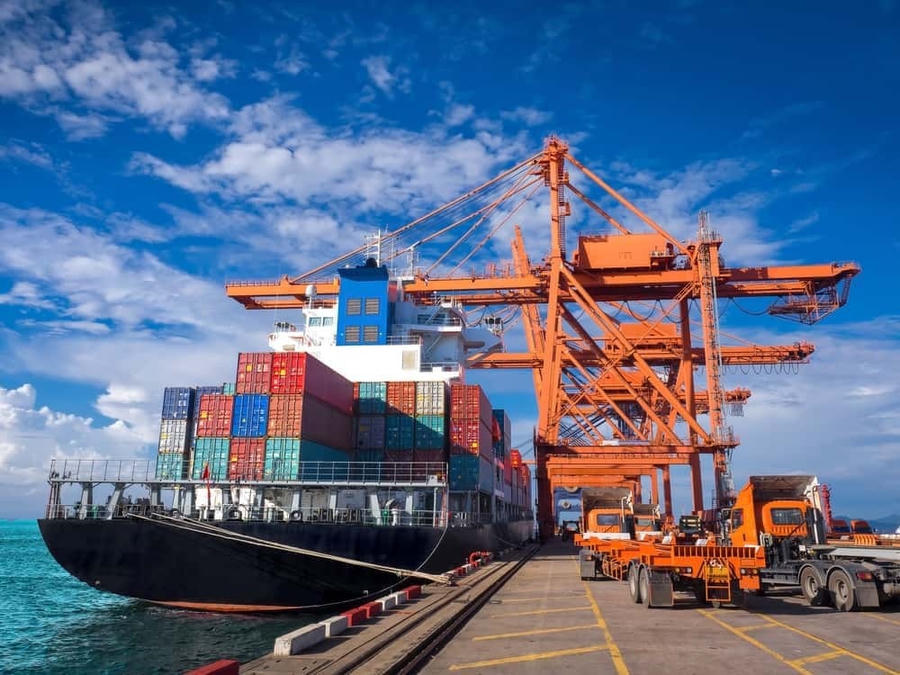
Vietnam maintains position as Singapore's 10th largest trading partner
According to the Vietnam Trade Office in Singapore, citing data from Enterprise Singapore, Vietnam maintained its position as Singapore's 10th largest trading partner during the first eight months of 2026. Total bilateral trade turnover reached SGD 37.6 billion, a 44.9% increase compared to the same period in 2025.
Specifically, Singapore's exports to Vietnam totaled SGD 20.5 billion (up 11.8%), while imports from Vietnam reached SGD 17.1 billion (up 124.2%). Singapore currently records a trade surplus of SGD 3.3 billion with Vietnam. However, regarding domestic exports (goods of local origin), Singapore runs a trade deficit of SGD 11.3 billion.
Data from Enterprise Singapore indicates that in August 2026 alone, total trade turnover between Singapore and Vietnam reached nearly SGD 4.6 billion, up 59% year-on-year.
Of this figure, Singapore's exports to Vietnam amounted to nearly SGD 2.6 billion (up 35.6%), while imports from Vietnam reached nearly SGD 2 billion (up 106.3%).
Electrical machinery and equipment continue to drive growth
Electrical machinery, equipment, and components (HS Code 85) remained Vietnam's largest export category to Singapore during the first eight months of the year, reaching SGD 8.6 billion—a 121.1% increase—and accounting for over 50% of the total value of goods Singapore imported from Vietnam.
Ranking next was the category of mechanical machinery, equipment, and parts (HS Code 84), with a turnover of SGD 6.2 billion, marking a 255.9% increase compared to the same period. Additionally, glass and glass products are among the key exports to this market.
Conversely, Singapore’s exports to Vietnam consist primarily of electronics, fuels, petroleum, mechanical machinery, plastics, cosmetics, and optical equipment.
Vietnamese enterprises need to be aware of Singapore's new import regulations.
Mr. Cao Xuan Thang, Vietnam’s Trade Counsellor in Singapore, noted that overall, trade trends between Vietnam and Singapore during the first eight months of the year align well with Singapore's current economic landscape: the acceleration of global AI investment is strongly driving exports of electronics, re-exports, specialized machinery, and regional trade activities.
In this context, Vietnam serves both as a major destination for electronics and machinery transshipped via Singapore and as an increasingly important supplier to Singapore for goods under HS Code 85 and, notably, HS Code 84.
However, given that approximately 83% of bilateral trade is concentrated in just three HS chapters—and re-exports account for a significant share of trade from Singapore to Vietnam—it is essential to continue monitoring data at the 4-digit and 6-digit HS levels. Key metrics to track include the proportion of goods with Singaporean origin, cargo volumes, and unit prices; this will help distinguish between growth driven by genuine production expansion, transshipment activities, and price fluctuations.
Notably, Singapore Customs has issued a notice requiring traders and importers to accurately declare import values for seafood, fruits, and vegetables, effective September 10, 2026, following the discovery of numerous instances where declared values were lower than actual values.
Under Singapore's Customs Act, individuals who provide inaccurate declarations may face fines of up to SGD 10,000 or an amount equivalent to the duty payable, and could also face imprisonment for up to 12 months, depending on the specific circumstances. The Vietnam Trade Office in Singapore advises Vietnamese enterprises to proactively discuss with their importing partners the requirement to accurately declare the value of goods. Additionally, businesses should fully comply with regulations regarding import permits, quarantine, and food safety to minimize the risks of customs clearance delays and additional costs during the export process.
For the remainder of the year, the Vietnam Trade Office in Singapore plans to continue providing market policy updates and assisting enterprises with trade connections, brand promotion, and expanding the export of Vietnamese goods to Singapore.